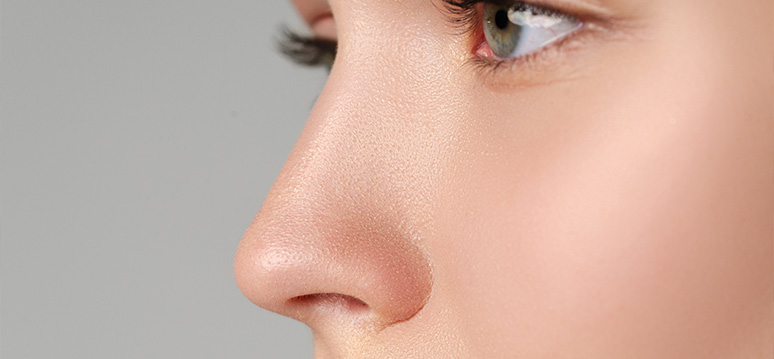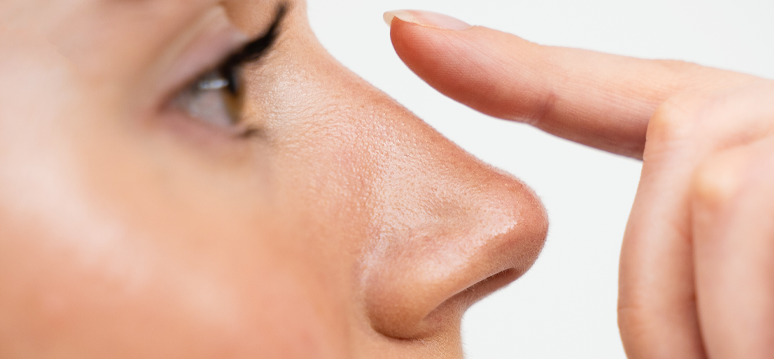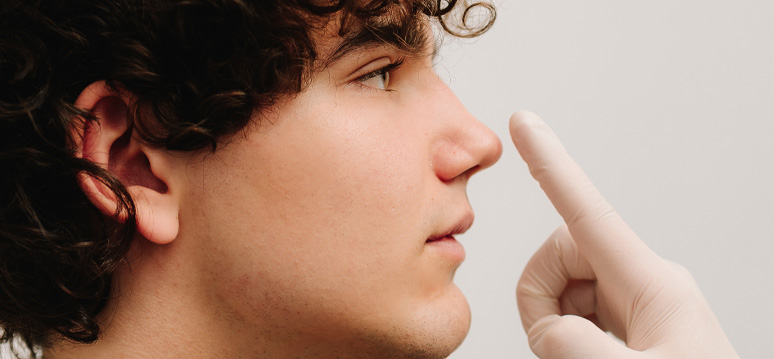
For many of us, the nose is more than just a facial feature; it is the anchor of our profile and the centerpiece of our reflection. When that centerpiece feels out of balance—perhaps the bridge is too broad, the nostrils flare excessively, or the tip lacks definition—it can dominate your face and diminish your confidence.
If you find yourself contouring heavily to create the illusion of a slimmer nose or avoiding certain angles in photos, you are not alone. A wide nose is one of the most common concerns among rhinoplasty patients. While makeup offers a temporary disguise, it cannot correct the underlying structural anatomy.
The good news? Wide nose surgery (a specialized form of rhinoplasty) is a transformative solution designed to narrow the nasal structure, refine the tip, and create harmony with your eyes, cheeks, and chin.
At Memorial Plastic Surgery in Houston, Texas, we understand that “narrowing” a nose isn’t just about making it smaller; it’s about architectural precision. Whether you require osteotomies to slim the bridge or an alarplasty to tuck in the nostrils, our board-certified plastic surgeons, led by Dr. Tyler McElwee, combines artistry with advanced surgical techniques to deliver natural, balanced results.
In this comprehensive guide, we will walk you through everything you need to know about wide nose surgery—from the specific techniques we use to the recovery timeline and costs involved.
What Exactly Is a "Wide Nose"?
Before diving into surgery, it is crucial to understand where the width is coming from. A “wide nose” is a broad term that usually refers to one (or a combination) of three distinct anatomical issues. Your surgical plan at Memorial Plastic Surgery will depend entirely on which of these areas needs addressing:
1. A Wide Nasal Bridge
The bridge is the bony upper third of the nose. If your nasal bones are set far apart, your nose may appear flat or broad from the front view, even if it looks perfect from the side. This is often genetic and requires structural narrowing.
2. A Bulbous or Boxy Tip
The nasal tip consists of cartilage, not bone. If the lower lateral cartilages are convex, spaced far apart, or covered in thick skin, the tip can look round, undefined, or “bulbous.” This creates a lack of refinement that can make the entire nose appear wider than it actually is.
3. Wide Nostrils (Alar Flaring)
This refers to the base of the nose. If the nostrils extend beyond the inner corners of your eyes (the intercanthal distance), they may be considered wide. This is common in many ethnicities and is often addressed with a specific procedure called an Alarplasty.
The Surgical Solutions: How We Fix a Wide Nose
At Memorial Plastic Surgery, we do not believe in “cookie-cutter” noses. Narrowing a wide nose requires a tailored approach. Here are the primary techniques our surgeons utilize to achieve a slimmer, more refined profile.
Osteotomies: Narrowing the Bridge
If your nasal bridge is wide, simply shaving down the bone (as done for a hump) isn’t enough. To actually narrow the width, surgeons perform osteotomies.
- What it is: This involves controlled, precise cuts in the nasal bones.
- How it works: Once the bones are mobilized, they are carefully shifted inward to close the gap and create a narrower pyramid shape.
- The Result: A sleeker bridge that catches the light differently, defining the center of your face.
Tip Suturing and Grafting: Refining the Tip
Correcting a bulbous tip is an art form. We use a combination of suturing techniques and cartilage grafts.
- Transdomal Sutures: We use internal stitches to bind the tip cartilages closer together, instantly sharpening the tip.
- Cephalic Trim: In some cases, we remove a small strip of cartilage from the upper edge of the tip to reduce volume.
- Cartilage Grafts: If the tip is flat, we may use cartilage (usually from your septum) to build a “strut” that projects the tip forward. Increasing projection often creates the optical illusion of a slimmer nose.
Alarplasty: Reducing Nostril Width
For patients whose primary concern is the width of the nostrils, an Alarplasty (or Alar Base Reduction) is the gold standard.
- The Wedge Excision: The surgeon removes a small wedge of tissue from the area where the nostril meets the cheek.
- The Weir Excision: This technique removes a piece of tissue from the nostril curve itself to reduce flaring.
- Hidden Scars: Our surgeons at Memorial Plastic Surgery are meticulous about incision placement. The incisions are hidden in the natural crease of the nose, making them virtually undetectable once healed.
The Intersection of Wide Noses and Ethnic Rhinoplasty
A significant number of patients seeking wide nose surgery are of African American, Asian, or Hispanic descent. This brings us to the specialized field of Ethnic Rhinoplasty.
Standard rhinoplasty techniques taught decades ago were often based on Caucasian anatomy. Applying those same techniques to an ethnic nose can result in an unnatural, “pinched” look that erases cultural identity.
At Memorial Plastic Surgery, we specialize in preservation.
- Thick Skin: Ethnic patients often have thicker nasal skin. We use specific structural grafting techniques to push against the thick skin, ensuring the definition shows through.
- Maintaining Heritage: Our goal is not to give you a “Westernized” nose, but to give you a refined version of your nose. We aim to balance your features while respecting your ethnic background.
The Procedure: What to Expect at Memorial Plastic Surgery
Choosing to undergo surgery is a big decision. Here is a step-by-step look at the patient experience at our Houston clinic.
The Consultation
Your journey begins at our office on the Katy Freeway or in Clear Lake. During your consultation, we use advanced imaging to discuss your goals. We will examine your breathing function (septum) as well as the aesthetics.
Anesthesia and Incisions
- Anesthesia: Wide nose rhinoplasty is typically performed under general anesthesia to ensure your safety and comfort.
- Open vs. Closed Rhinoplasty:
- Open Rhinoplasty: Involves a tiny incision on the columella (the strip of skin between nostrils). This allows the surgeon to lift the skin and see the anatomy clearly. This is preferred for complex wide nose corrections.
- Closed Rhinoplasty: All incisions are inside the nostrils. This is sometimes possible for minor tip refinements.
Duration
The surgery typically takes 2 to 3.5 hours, depending on the complexity (e.g., if you are also having a septoplasty for breathing issues).
Recovery: The Journey to Your New Nose
Patience is key with wide nose surgery. Because the skin must “shrink wrap” down to the new, smaller framework, results appear gradually.
The First Week
- Splint: You will wake up with a thermoplastic splint on your nose to protect the bones (especially if osteotomies were performed).
- Congestion: You will feel stuffy, like you have a bad head cold.
- Bruising: Some bruising under the eyes is normal but usually fades within 7–10 days.
- Splint Removal: The “big reveal” happens around Day 7 when we remove the splint and stitches. You will immediately see a narrower shape, though it will be swollen.
The “Swelling” Phase
- 2 Weeks: You are “restaurant ready.” Most bruising is gone, and you can cover any yellowing with makeup.
- 3 Months: About 60-70% of the swelling has subsided. The bridge will look defined, but the tip may still feel slightly firm or puffy.
- 1 Year: The final “finesse” of the tip definition takes a full year (or longer for thick skin) to settle.
Why Choose Memorial Plastic Surgery?
When it comes to your face, there is no room for compromise. Houston is home to many medical professionals, but Memorial Plastic Surgery stands apart for several reasons:
1. Elite Surgical Talent
Founded by Dr. Patrick Hsu, our team includes top-tier surgeons like Dr. Kendall Roehl, Dr. Vasileios Vasilakis, Dr. Pierre Lapaine and specialized facial plastic surgeons Dr. Tyler McElwee.Our surgeons are not just board-certified; they are specialists in facial aesthetics who perform hundreds of rhinoplasties annually. They understand the nuances of the “wide nose” better than generalists.
2. Safety and Luxury
We operate out of fully accredited surgical facilities that prioritize patient safety above all else. From the moment you walk into our clinic, you are treated with white-glove service that eases anxiety and builds trust.
3. Serving Greater Houston
While our primary location is in the Memorial City area (77024), we are the go-to clinic for patients across the region. We regularly treat patients from:
Katy, Sugar Land, The Woodlands, Spring Branch, Pearland, Hedwig Village, Clear Lake & Webster
We also offer concierge services for our out-of-town patients flying in for surgery, assisting with accommodations and transportation.
The Cost of Wide Nose Surgery in Houston
Price is an important factor for our patients. While it is impossible to give an exact quote without seeing you, we believe in transparency.
At Memorial Plastic Surgery, the cost for a rhinoplasty typically ranges from $7,500 to $10,000+.
What influences this price?
- Complexity: A simple tip refinement is less expensive than a full reconstruction with osteotomies and cartilage grafting.
- Revision: If you have had a previous nose job elsewhere that needs correcting, the cost is higher due to the difficulty of working with scar tissue.
- Anesthesia & Facility Fees: Our quotes are generally all-inclusive, covering the surgeon’s fee, operating room costs, and anesthesia.
Frequently Asked Questions (FAQs)
Will wide nose surgery affect my breathing?
It should improve it or keep it the same, never worsen it. If you have a deviated septum, we can perform a Septorhinoplasty to narrow the nose and fix your breathing simultaneously. This functional portion may even be partially covered by insurance.
Can I just get the nostrils reduced (Alarplasty) without a full nose job?
Yes! If you are happy with your bridge and tip but dislike the flaring of your nostrils, an isolated Alarplasty can be performed. This is often a shorter procedure with a quicker recovery, sometimes done under local anesthesia.
How long until I can wear glasses?
If we break the nasal bones (osteotomies) to narrow the bridge, you cannot rest glasses on your nose for about 6 weeks. You will need to tape them to your forehead or wear contacts to prevent the glasses from shifting the healing bones.
Is the surgery painful?
Surprisingly, most patients report that rhinoplasty is not very painful. The sensation is described more as “pressure” or “congestion” rather than sharp pain. Mild pain medication is usually sufficient for the first few days.
Summary: Your New Profile Awaits
Living with a nose that you feel doesn’t fit your face can be a daily source of insecurity. But you don’t have to hide behind filters or contouring kits forever. Wide nose surgery is a safe, effective, and permanent way to bring balance to your features.
By narrowing the bridge, refining the bulbous tip, or reducing nostril flare, the surgeons at Memorial Plastic Surgery can help you reveal a version of yourself that feels more authentic and confident. Are you ready to take the next step? Schedule your consultation today!