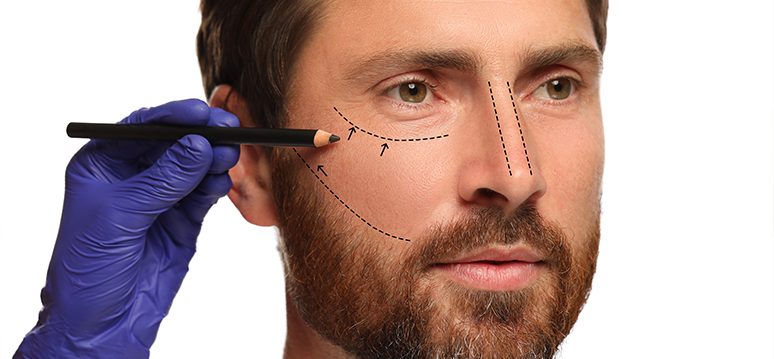
Imagine turning back the clock ten to fifteen years on your facial appearance, reclaiming the sharp jawline, high cheekbones, and smooth neck of your youth. Now, imagine achieving all of this without the dreaded “windblown” look and, most importantly, without any tell-tale surgical scars.
For decades, the biggest deterrent for men and women considering facial rejuvenation was the fear of visible, permanent scarring. We’ve all seen the unnatural results of older facelift techniques: stretched skin, pulled earlobes, and obvious surgical lines. But the world of aesthetic surgery has undergone a massive evolution. Today, the deep plane facelift stands as the gold standard for facial rejuvenation, and the secret to its undetectable results lies in the mastery of the deep plane facelift incision.
If you have been scrolling through Instagram—perhaps marveling at incredible, scarless facelift reveals—you might be wondering how such dramatic transformations are possible with virtually zero evidence of a scalpel.
In this comprehensive guide, we are pulling back the curtain on the deep plane facelift incision. Brought to you by the experts at Memorial Plastic Surgery in Houston, Texas, this article will explore the anatomy of the incision, why this technique guarantees better healing, and actionable tips for flawless recovery.
What is a Deep Plane Facelift? (And Why It Changes Everything)
Before we can understand the incision, we must first understand the procedure.
Traditional facelifts (often referred to as SMAS plication or skin-only facelifts) rely on pulling the superficial layers of the skin tight to iron out wrinkles. Because the skin is under immense tension, the incisions around the ears are subjected to constant pulling. Over time, this tension causes the scars to widen, thicken, and become highly visible. Furthermore, it can pull the earlobe downward, creating a deformity known as a “pixie ear.”
The deep plane facelift takes an entirely different approach. Instead of pulling the skin, the surgeon releases the deep retaining ligaments of the face and repositions the underlying muscle and fat layers (the SMAS layer) as a single, composite unit.
The “Tension-Free” Secret
Because the lifting and tightening happen beneath the muscle layer, the superficial skin is simply redraped gently over your newly restored facial contours. There is absolutely no tension on the skin. This tension-free closure is the absolute most critical factor in achieving an invisible deep plane facelift incision. Without tension, the skin edges heal seamlessly, leaving a hairline-thin mark that fades into obscurity.
Decoding the Deep Plane Facelift Incision: A Meticulous Geography
A masterful plastic surgeon approaches the facelift incision not just as a surgical cut, but as a work of art. The goal is camouflage. At Memorial Plastic Surgery, our board-certified surgeons meticulously hide the incisions within the natural contours, shadows, and creases of your face.
Here is the exact geographical pathway of a flawless deep plane facelift incision:
1. The Temporal Hairline (The Starting Point)
The incision typically begins high up in the temporal region, completely hidden within the hair-bearing skin of your temples. By keeping the incision inside the hairline, there is no visible scar on the side of the forehead, and the natural position of your sideburns remains intact.
2. The Pre-Auricular Crease and Tragus (The Front of the Ear)
As the incision moves downward, it traces the exact natural crease where the ear meets the cheek. Rather than going straight down in front of the ear (which leaves an obvious line), an expert surgeon uses a retro-tragal or tragal edge approach. The incision is strategically tucked inside or exactly along the edge of the tragus—the small piece of cartilage that protrudes in front of the ear canal. Once healed, the shadow of the ear naturally hides any faint trace of the scar.
3. The Earlobe (The Turn)
The incision expertly curves exactly along the natural attachment point of the earlobe. Because a deep plane facelift utilizes a tension-free closure, the earlobe remains in its natural, rounded position, completely avoiding the stretched “pixie ear” look that gives away poorly performed plastic surgery.
4. The Post-Auricular and Occipital Hairline (Behind the Ear)
Finally, the incision travels up the crease behind the ear (the retroauricular sulcus) and gently tapers off into the hairline at the back of the neck (the occipital hairline). This allows the surgeon to access the neck for a comprehensive neck lift, tightening the platysma muscle and removing loose skin, while ensuring the scars are entirely hidden by your ears and hair.
Why Choose Memorial Plastic Surgery?
When it comes to your face, there is no room for compromise. The deep plane facelift is a highly complex, advanced surgical technique that requires an intricate understanding of facial anatomy and aesthetic artistry. It is not a procedure that every plastic surgeon is qualified to perform.
Located in the heart of Houston, Texas, Memorial Plastic Surgery is a premier destination for patients seeking elite facial rejuvenation. We proudly serve the greater Houston area, including patients traveling from Katy, Sugar Land, The Woodlands, Pearland, Cypress, and Spring.
Our surgical team is renowned for their meticulous suturing techniques and dedication to natural, un-operated results. We understand that our patients want to look refreshed, vibrant, and youthful—not “done.” By utilizing the advanced deep plane technique, we ensure that your incisions heal so beautifully that even your hairdresser won’t know you’ve had surgery.
Actionable Tips: Post-Op Care for Flawless Scars
Even with a world-class surgeon, how you care for your incisions post-operatively plays a massive role in how they ultimately heal. Here are actionable tips to ensure your deep plane facelift incision heals flawlessly:
- Keep it Pristine in the First 48 Hours: Follow your surgeon’s exact protocols for cleaning the incision lines. Usually, this involves gentle cleansing with saline and applying a specific antibacterial ointment to prevent crusting.
- Prioritize Sun Protection: UV rays are the number one enemy of healing scars. Sun exposure can cause scars to hyper-pigment (turn dark brown or red). Once cleared by your surgeon, apply a broad-spectrum SPF 50 daily to the incision areas, wear wide-brimmed hats, and physically block the sun from your ears for at least the first six months.
- Utilize Silicone Scar Gel: Around the 3-to-4-week mark (once the incisions are fully closed and scabs have resolved), start applying a medical-grade silicone scar gel. Silicone creates a micro-climate that hydrates the scar tissue, encouraging it to lay flat and fade quickly.
- Absolutely No Smoking or Vaping: Nicotine constricts blood vessels, drastically reducing the oxygen supply to your healing skin. This can lead to skin necrosis (tissue death) and wide, ugly scars. You must abstain from all nicotine products for weeks before and after your procedure.
- Eat a Healing Diet: Boost your body’s collagen production by eating a diet rich in Vitamin C, Zinc, and lean proteins during your recovery window.
Frequently Asked Questions (FAQs)
How long does it take for a deep plane facelift incision to fade?
While you will look presentable to the public within 2 to 3 weeks, scar maturation is a year-long process. By month three, the incisions are usually light pink and easily concealed with a tiny amount of makeup. By months 6 to 12, they typically fade into fine, white, nearly invisible lines.
Will I lose hair where the incisions are made?
When performed correctly by an expert at Memorial Plastic Surgery, the incisions are meticulously beveled to preserve the hair follicles. This allows your natural hair to actually grow through the scar, further hiding it from view.
Does the deep plane facelift incision hurt?
Surprisingly, facelift recovery is relatively painless. Patients usually report feelings of tightness and numbness rather than sharp pain. The incision lines themselves may feel a bit sensitive or itchy as the nerves regenerate, but pain is very manageable with prescribed medications.
Can I combine multiple procedures if I am flying in?
Absolutely. However, the incision placement for men is slightly different due to facial hair (beards/sideburns). A skilled surgeon will adjust the pre-auricular incision to ensure beard hair is not pulled onto the ear or tragus, maintaining a naturally masculine appearance.
TL;DR: The Key Takeaways
Short on time? Here is what you need to know about the deep plane facelift incision:
- No Tension = No Scars: Unlike older facelifts that pull the skin, deep plane facelifts lift the underlying muscle. This means zero tension on the skin, resulting in incredibly fine, almost invisible scars.
- Strategic Placement: Incisions are expertly hidden inside the hairline, along the natural curve of the ear (the tragus), and behind the earlobe.
- No “Pixie Ears”: Because there is no pulling on the skin, your earlobes remain perfectly natural.
- Aftercare is Crucial: Strict sun protection, silicone gels, and avoiding nicotine are mandatory for flawless scar healing.
- Local Expertise: Memorial Plastic Surgery in Houston, TX (serving Katy, Sugar Land, The Woodlands, etc.) specializes in these advanced, scar-concealing techniques.
Conclusion: Step Into Your Most Radiant Self
The anxiety surrounding visible scarring should never stand in the way of you looking as young and vibrant on the outside as you feel on the inside. The deep plane facelift incision represents the pinnacle of modern aesthetic surgery—a seamless blend of anatomical science and surgical artistry that allows you to turn back the clock without leaving a trace.
If you are a resident of Houston, Katy, Sugar Land, The Woodlands, Pearland, or Cypress, world-class facial rejuvenation is right in your backyard.
Are you ready to discover what a deep plane facelift can do for you? Don’t trust your face to just anyone. Contact the board-certified experts at Memorial Plastic Surgery today to schedule your consultation.