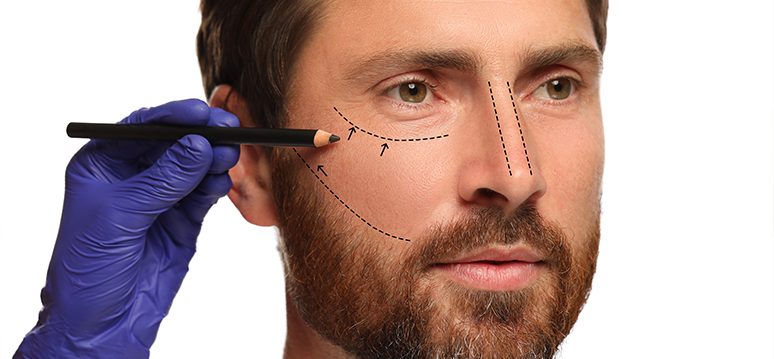
What Is a Male Facelift?
A male facelift is a facial rejuvenation procedure designed to address visible signs of aging in the lower face, jawline, and neck. As men age, changes in the skin, underlying tissues, and facial fat can contribute to sagging skin, deeper folds, jowls, and a less defined jawline.
While facelift surgery is performed on both men and women, facial anatomy and aesthetic goals can differ. A male facelift is generally planned with attention to masculine facial characteristics, including the jawline, chin, neck, skin thickness, facial hair patterns, and the overall proportions of the face.
The goal is not to create an entirely different appearance. Instead, surgery may help address age-related changes while maintaining the patient’s individual features and natural facial character.
Why Do Men Consider a Facelift?
Interest in facial rejuvenation among men has increased as more men look for ways to address visible aging while maintaining a natural appearance. Some men may notice that their face looks tired or older than they feel, even when they maintain a healthy lifestyle.
Common concerns that may lead someone to consider a male facelift include:
- Sagging skin around the cheeks and lower face
- Jowls along the jawline
- Loose skin beneath the chin
- Neck laxity
- Deeper facial folds
- Loss of definition around the jawline
- Excess or displaced facial and neck tissue
A facelift may be considered when these concerns are primarily related to tissue laxity and cannot be adequately addressed through nonsurgical treatments alone.
How Is a Male Facelift Different?
The fundamental principles of facelift surgery are similar regardless of gender, but surgical planning should account for differences in anatomy and aesthetic preferences.
Men often have thicker skin, stronger facial structures, and different patterns of facial hair growth. The beard and sideburn areas also require careful consideration when planning incisions and repositioning tissue.
A surgeon experienced in male facial rejuvenation will typically evaluate the entire face rather than focusing on one isolated feature. The objective is to create an approach that complements the patient’s existing facial structure.
Preserving masculine characteristics is particularly important. An overly tight or excessively altered appearance may not produce the aesthetic result a male patient wants. Instead, treatment is generally individualized according to facial anatomy, skin quality, age-related changes, and personal goals.
What Areas Can a Male Facelift Address?
A male facelift primarily focuses on the lower portion of the face and may also involve the neck, depending on the patient’s needs.
Areas that may be addressed include:
Jawline and Jowls
Sagging tissues can create jowls that obscure the natural contour of the jaw. A facelift may reposition underlying tissues and remove or redistribute excess skin to improve the appearance of this area.
Lower Face
Age-related changes in the cheeks and lower face can contribute to deeper folds and a less defined facial contour. Facelift surgery may address some of these changes by repositioning deeper facial tissues.
Neck
Some patients have loose skin or muscle laxity extending from the lower face into the neck. When appropriate, facelift surgery may be combined with neck-focused techniques to address these concerns.
The exact areas treated depend on the individual’s anatomy and surgical plan.
Who May Be a Candidate for a Male Facelift?
There is no single age at which men should consider facelift surgery. Candidacy depends more on facial changes, overall health, skin quality, and personal goals than on age alone.
A potential candidate may:
- Have noticeable sagging in the lower face or neck
- Be bothered by jowls or loss of jawline definition
- Have realistic expectations about surgery
- Be in generally good health
- Be willing to follow preoperative and postoperative instructions
- Want a surgical approach to facial rejuvenation
A consultation with a qualified plastic surgeon is important because not every concern requires a facelift. Depending on the individual’s anatomy, a less extensive procedure or nonsurgical treatment may be more appropriate.
What Happens During Male Facelift Surgery?
The details of a male facelift vary according to the surgical technique and the patient’s individual needs.
Before surgery, the surgeon evaluates the face and neck, discusses aesthetic goals, reviews medical history, and develops an individualized treatment plan.
During surgery, incisions are generally placed in locations designed to be as inconspicuous as possible. The surgeon may reposition or tighten deeper facial tissues and address excess skin as appropriate.
For male patients, incision planning can require additional attention because facial hair and sideburn patterns may affect how scars appear after healing.
The procedure may be performed alone or combined with other facial procedures when clinically appropriate. The exact approach depends on the patient’s anatomy and desired areas of improvement.
What Is Recovery Like After a Male Facelift?
Recovery varies from person to person and depends on the extent of surgery and whether additional procedures are performed.
Patients can generally expect some temporary swelling, bruising, tightness, or sensitivity during the early recovery period. These effects gradually improve as healing progresses.
Your surgeon will provide specific instructions regarding:
- Wound and incision care
- Sleeping position
- Physical activity
- Washing the face and hair
- Medications
- Follow-up appointments
- Returning to work and normal activities
The timeline for returning to work, exercise, and social activities varies. Patients should follow their surgeon’s individual recommendations rather than relying on a fixed recovery schedule.
It is also important to understand that the final appearance may take time to develop as swelling subsides and tissues settle.
Potential Benefits of a Male Facelift
A male facelift may offer several potential benefits for appropriately selected patients, including:
- Addressing sagging lower facial tissues
- Improving the appearance of jowls
- Supporting a more defined jawline
- Addressing certain signs of neck aging
- Creating a refreshed appearance while preserving individual facial characteristics
The results vary between patients. Factors such as skin quality, facial anatomy, age, lifestyle, and the surgical technique can influence the outcome.
A facelift also does not stop the natural aging process. Facial tissues will continue to change over time.
Understanding the Risks
Like any surgical procedure, a male facelift involves potential risks and complications. These may include bleeding, infection, scarring, changes in sensation, swelling, asymmetry, skin-healing problems, hairline or facial-hair changes, and reactions to anesthesia.
More significant complications are possible, although their likelihood varies between patients and procedures.
Discussing your medical history, medications, smoking status, previous facial procedures, and other relevant factors with your surgeon can help with appropriate surgical planning.
A qualified surgeon should explain the potential benefits, limitations, alternatives, and risks before you decide whether surgery is right for you.
Choosing a Surgeon for a Male Facelift
Choosing the right surgeon is one of the most important decisions when considering facial rejuvenation.
Look for a board-certified plastic surgeon with appropriate training and experience in facial surgery. When researching surgeons, consider:
- Experience performing facelifts on male patients
- Understanding of male facial anatomy
- Before-and-after photographs of comparable patients
- Surgical facility credentials
- Clear communication during consultation
- A personalized treatment approach
- Willingness to discuss risks and alternatives
During your consultation, explain what you want to change and what you want to preserve. A good surgical plan should account for both your concerns and the characteristics that make your face uniquely yours.
Frequently Asked Questions About Male Facelift
1. Is a male facelift different from a facelift for women?
The basic surgical principles can be similar, but male facelift surgery requires consideration of masculine facial characteristics, skin thickness, facial hair, sideburns, jawline structure, and individual aesthetic goals.
2. What age is best for a male facelift?
There is no universal ideal age. Candidacy depends on the degree of facial aging, skin laxity, overall health, and the patient’s goals rather than age alone.
3. Can a male facelift improve the jawline?
A facelift may improve the appearance of the jawline when sagging skin and underlying tissue laxity contribute to jowling. The degree of improvement depends on individual anatomy.
4. Will a male facelift make me look unnatural?
A carefully planned facelift is intended to address age-related changes while maintaining the patient’s individual facial characteristics. However, results vary, and expectations should be discussed thoroughly with the surgeon.
5. How long does recovery take after a male facelift?
Recovery varies depending on the surgical technique, the extent of treatment, and the individual patient’s healing process. Your surgeon will provide a personalized recovery timeline.