Understanding Face Sagging
Face sagging is one of the most noticeable changes that can occur as we age. The cheeks may gradually appear lower, the jawline can become less defined, and loose skin may develop around the lower face and neck. For some people, these changes happen slowly over decades. For others, genetics, significant weight loss, sun exposure, or lifestyle factors can make facial aging more noticeable at an earlier age.
Although facial sagging is a natural part of aging, it does not mean that everyone will experience it in exactly the same way. Facial aging involves changes in the skin, fat, connective tissues, and underlying structures. As collagen and elastin decrease, the skin becomes less resilient. At the same time, changes in facial volume can affect the contours that previously created a youthful appearance.
The good news is that there are several approaches for improving the appearance of sagging facial skin, ranging from consistent skincare and noninvasive treatments to surgical facial rejuvenation. The appropriate approach depends on the degree of laxity, skin quality, facial volume, anatomy, goals, and overall health.
At Memorial Plastic Surgery, we take an individualized approach to facial rejuvenation. Understanding what causes facial sagging is an important first step toward choosing an appropriate treatment strategy.
What Causes Face Sagging?
Facial sagging is not caused by one factor. Instead, it results from several age-related and environmental changes that occur simultaneously.
1. Natural Loss of Collagen and Elastin
Collagen provides structural support for the skin, while elastin helps skin return toward its original shape after being stretched. With age, the skin gradually becomes thinner and less elastic.
Reduced collagen production can contribute to decreased firmness, wrinkles, and skin laxity. The American Academy of Dermatology notes that aging naturally causes skin to become thinner and drier, while wrinkles and other visible changes become more apparent over time.
This gradual loss of structural support is one reason the skin may no longer appear as tight as it did when we were younger.
2. Changes in Facial Volume
Facial aging is not simply a matter of loose skin. Changes in the amount and distribution of facial fat can significantly affect facial contours.
Some areas may lose volume while others develop more noticeable fullness. The cheeks can look flatter, the area around the eyes may become hollow, and the lower face can develop jowls.
Research discussed by the American Society of Plastic Surgeons highlights facial fat loss as one factor that can contribute to an older, more deflated appearance.
Because of this, facial rejuvenation may sometimes involve addressing both skin laxity and volume loss, rather than simply tightening the skin.
3. Gravity and Time
Gravity continuously affects facial tissues. Over many years, changes in the skin and deeper soft tissues can contribute to downward movement of facial contours.
This can eventually become noticeable as:
- Lower cheek position
- Jowls along the jawline
- Deeper facial folds
- Less-defined jawline
- Loose skin beneath the chin
- Sagging around the neck
The American Society of Plastic Surgeons identifies relaxation of facial skin, developing jowls, and loose neck skin among the visible signs that a facelift can address.
4. Sun Exposure
Repeated ultraviolet exposure contributes to premature skin aging. Over time, sun exposure can affect skin texture, pigmentation, collagen, and elasticity.
Daily sun protection is therefore one of the simplest ways to help protect the skin from premature aging. The American Academy of Dermatology recommends sun protection as part of an approach to reducing premature skin aging.
5. Significant Weight Loss
Losing a substantial amount of weight can improve overall health and body contours, but rapid or significant weight loss may also reduce facial volume.
When facial fat decreases, previously full areas of the face can appear more hollow, while existing loose skin may become more noticeable. The AAD has also discussed facial changes associated with rapid weight loss, including decreased facial fullness, sagging skin, and wrinkles.
6. Genetics and Lifestyle
Genetics influence when and how facial aging becomes visible. Two people of the same age can have very different degrees of facial laxity.
Smoking, excessive sun exposure, poor sleep, and other lifestyle factors can also influence the appearance and health of the skin. Maintaining a healthy lifestyle and protecting the skin can help support healthier-looking facial skin over time.
What Does Face Sagging Look Like?
Face sagging can develop gradually, making early changes difficult to notice. Common signs include:
- Less-defined cheeks
- Jowls around the lower jaw
- Loose skin around the mouth
- Deeper nasolabial folds
- Changes in the jawline
- Loose skin beneath the chin
- Neck laxity
- A less-defined transition between the face and neck
- Increased wrinkles and fine lines
- A tired or aged facial appearance
Not everyone develops all of these signs. Facial aging is highly individualized, which is why treatment should also be individualized.
How Can Face Sagging Be Treated?
Treatment depends on how much sagging is present and what is causing the change in appearance.
There is no single treatment that is ideal for every patient. A person with mild skin laxity may benefit from a nonsurgical approach, while someone with substantial jowling and loose neck skin may require a surgical procedure for a more significant correction.
Nonsurgical Skin Tightening
Nonsurgical treatments may be considered when the primary concern is mild skin laxity or skin quality.
Depending on the treatment and patient’s anatomy, options may include energy-based skin tightening, laser treatments, resurfacing procedures, and other aesthetic treatments.
The AAD explains that nonsurgical skin-tightening treatments can provide modest improvement, often with little or no downtime, while surgical lifting generally produces more dramatic results.
These treatments can be useful for selected patients, but expectations should remain realistic.
Dermal Fillers
When facial aging is primarily related to volume loss, dermal fillers may help restore fullness to selected areas.
Fillers do not physically remove significant amounts of loose skin. Instead, they can be used strategically to improve facial proportions and restore volume where appropriate.
For patients with substantial skin laxity, fillers alone may not provide the degree of lifting they want.
Facial Fat Transfer
Another approach to facial volume loss is transferring a patient’s own fat to areas that have become depleted.
Fat transfer may be considered when volume restoration is an important part of facial rejuvenation. The appropriate technique depends on the patient’s anatomy, available donor fat, skin quality, and desired outcome.
Facelift Surgery
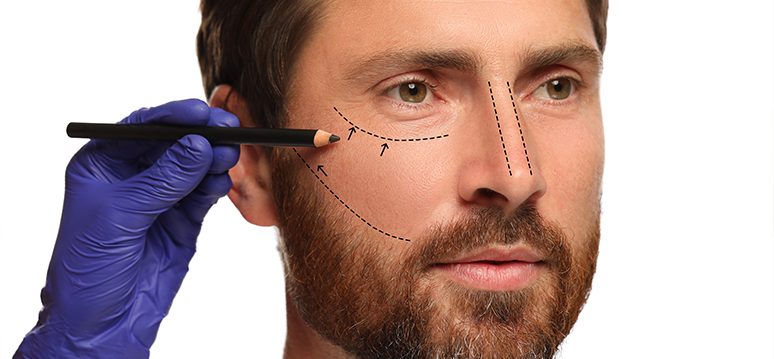
When face sagging becomes more pronounced, facelift surgery may offer the most comprehensive correction.
A facelift, medically known as rhytidectomy, is designed to improve visible signs of aging in the face and neck. According to the American Society of Plastic Surgeons, facelift surgery can address facial skin relaxation, jowls, deep folds, and loose skin and excess fat around the neck.
At Memorial Plastic Surgery, facelift treatment is individualized according to facial anatomy, skin elasticity, the degree of sagging, and the patient’s aesthetic goals.
The practice describes several facelift approaches, including standard facelift techniques and minimally invasive approaches selected according to the patient’s needs.
When Should We Consider a Facelift for Face Sagging?
A facelift may be worth discussing when loose skin and tissue descent have become significant enough that skincare or nonsurgical treatments cannot provide the desired improvement.
Potential signs that a surgical consultation may be appropriate include:
- Noticeable jowls
- Significant lower-face sagging
- Loose neck skin
- Loss of jawline definition
- Deep folds around the nose and mouth
- Persistent laxity despite nonsurgical treatments
- A desire for a more substantial and longer-lasting correction
A facelift is not intended to stop the aging process or fundamentally change a person’s identity. Instead, it can reposition and improve aging facial tissues to create a more youthful and refreshed appearance.
What Is Facelift Recovery Like?
Recovery varies depending on the procedure performed and the individual patient.
Immediately after surgery, swelling and bruising are expected. Patients receive postoperative instructions regarding wound care, medications, activity, follow-up appointments, and other aspects of recovery.
Many patients become presentable to the public within approximately 10 to 14 days, although the face can continue to settle and feel different for several months. The ASPS notes that it may take two to three months for the face to feel fully back to normal in terms of texture, sensation, and tightness.
Following postoperative instructions carefully is essential. We also recommend allowing adequate time for healing rather than judging the final outcome during the earliest stages of recovery.
How We Can Choose the Right Treatment for Face Sagging
Choosing a treatment should begin with identifying the primary cause of the visible change.
- If the concern is mainly skin texture, resurfacing or skincare may be appropriate.
- If the concern is mild skin laxity, nonsurgical tightening may provide some improvement.
- If the primary issue is volume loss, fillers or fat transfer may be considered.
- If there is significant skin and tissue sagging, facelift surgery may offer a more comprehensive solution.
In some cases, a combination approach may produce a more balanced result. Facial rejuvenation can involve addressing skin quality, volume, and tissue position rather than treating one feature in isolation.
Why Individualized Facial Rejuvenation Matters
There is no universal definition of an “ideal” face or a single procedure that works for everyone.
One person’s primary concern may be jowling, while another may be bothered more by volume loss in the cheeks or loose skin around the neck. Some patients want subtle improvement without surgery, while others want a more substantial correction.
At Memorial Plastic Surgery, individualized evaluation is an important part of the facial rejuvenation process. The practice emphasizes assessing skin texture and elasticity and the severity of wrinkles and folds before determining an appropriate facelift approach.
The objective should not be to make every face look the same. The objective is to create an improvement that is appropriate for the individual’s anatomy, goals, and expectations.
FAQS
1. What causes face sagging?
Face sagging is caused by several factors, including natural aging, declining collagen and elastin, changes in facial fat, gravity, sun exposure, genetics, and significant weight loss. These factors can work together to produce loose skin, jowls, wrinkles, and reduced facial definition.
2. Can face sagging be reversed naturally?
Healthy lifestyle habits and skincare can help maintain healthier-looking skin and may slow some signs of premature aging. However, significant facial sagging cannot generally be reversed through skincare alone. When substantial tissue laxity is present, procedures such as a facelift may provide a more noticeable lifting effect.
3. What is the best treatment for sagging facial skin?
There is no single best treatment for everyone. Mild laxity may respond to nonsurgical skin-tightening treatments, while volume loss may be addressed with fillers or fat transfer. More significant sagging involving the lower face and neck may be better addressed with facelift surgery.
4. Does a facelift remove all signs of aging?
No. A facelift can improve visible signs of facial aging, including sagging skin and jowls, but it does not stop the natural aging process. Skin quality, fine lines, pigmentation, and volume changes may require additional treatments or skincare.
5. How do I know if I am a candidate for a facelift?
A consultation with a qualified plastic surgeon is the best way to determine whether facelift surgery is appropriate. The evaluation should consider your facial anatomy, degree of skin laxity, overall health, expectations, and desired results.
Final Thoughts on Face Sagging
Face sagging is a natural part of facial aging, but we have more options than ever for addressing it. Understanding whether the primary concern involves skin laxity, facial volume loss, skin quality, or a combination of changes is essential for choosing an appropriate treatment.
Consistent sun protection, healthy lifestyle habits, and an effective skincare routine can help maintain the quality of the skin. Nonsurgical treatments can provide meaningful improvement for selected patients, particularly when laxity is mild. When significant jowling, loose facial skin, and neck laxity develop, a facelift may provide a more comprehensive approach.
At Memorial Plastic Surgery, we focus on evaluating each patient’s individual facial structure and aesthetic goals before recommending a treatment plan. Whether the goal is subtle rejuvenation or a more significant correction of facial sagging, an individualized consultation can help clarify the available options.
If face sagging is becoming a concern, learning about the available treatments is an important first step toward making an informed decision about facial rejuvenation.